After several requests, I have finally decided to post a post for general comments. When making general comments unrelated to the blog entries from our guest bloggers, you can use this positing. This will enable a more concise extention of class room discussions & current events discussions unrelated to specific weekly blog entries!
Blog away my friends!
Dr. D.
Tuesday, November 01, 2005


Monday, October 31, 2005
The International Criminal Court is a Waste of Time & Money

The International Criminal Court (ICC) is the first ever permanent, treaty-based international criminal court, established to promote the rule of law and ensure that the gravest international crimes do not go unpunished -- at least that is what it is supposed to do according to the ICC homepage http://www.icc-cpi.int/about.html. But can the ICC ever be successful with the United States clearing objecting to its existence? The ICC entered into force on July 1, 2002. Anyone who commits any of the crimes under the statute after July 1, 2002 will be liable for prosecution by the Court. What about those who commited crimes against humanity before July 1, 2002? These crimes include the crime of genocide, crimes against humanity, war crimes and the crime of aggression. Our guest bloggers this week are Bryan S., and Rory R. Their opinons are expressed below:
Bryan S.:
Genocide: acts committed with intent to destroy in whole or in part, a national, ethnical, racial, or religious group. Crimes against humanity: acts when committed as part of a widespread or systematic attack directed against any civilian population, with knowledge of the attack. War crimes: willful killing, torture or inhuman treatment, willfully causing great suffering or serious injury to body or health. Crimes of aggression: the use of force of one State against another, not justified by self-defense or other legally recognized exceptions. These atrocities are an affront to the international community; they violate the letter and the spirit of the Charter of the United Nations and the Universal Declaration of Human Rights. When these grievous violations occur, the international community has a moral obligation to intervene to prevent more human rights violations, and they have an obligation to punish the violators and the conspirators who aided in the commission of those acts. The violation of international law requires adjudication in a competent international criminal tribunal to ensure that all guilty parties are brought to justice and to serve as a deterrent to future human rights violations. The International Criminal Court can serve this purpose, and contrary to the beliefs of its opponents and detractors, is in the best interest of the international community.
The International Criminal Court is a necessity for protecting the international values to which all nations ascribe. According to Secretary-General Kofi Annan, “in the prospect of an international criminal court lies the promise of universal justice…. No state, no junta and no army anywhere can abuse human rights with impunity. Only then will the innocents of distant wars and conflicts know that they, too, may sleep under the cover of justice; that they too, have rights, and they those who violate those rights will be prosecuted (Driscoll 25).” Modern history has been marred by unspeakable violence, and there are cases in which the violators and the leaders of nations have fled to havens to live out the rest of their life. According to Douglass Cassel of Northwestern School of Law, there have been “no legal redress whatsoever for gross violations of human rights in 133 of 182 internal conflicts, including both civil wars and state terror and repression (Driscoll 111).” It is a mockery to the thousands of people of innocents who have lost their lives; it is a mockery to the thousands who have their lives destroyed, and it is a mockery to the international community that this is the case. A person who violates the rights and immunities that are granted to every person because he is a human being, he must be punished.
The protection of these rights is the responsibility of every United Nations member State; in the Preamble of the UN Charter, “the peoples of the United Nations…reaffirm faith in fundamental human rights, [and] in the dignity and worth of the human person.” The value of the words that have been adopted in the Charter and other treaties of the United Nations have no value unless all persons, regardless of status or positions, recognize that their egregious actions will have consequences. Further, the international community must work to prevent further human rights violations. A functioning International Criminal Court can only serve as a deterrent to future atrocities, and as a means of closure for the victims of human rights violations. According to Cassel, the former head of the Civil Affairs of UNPROFOR, the UN mission in Yugoslavia during the 1990s stated, “Had their been, from the start in Yugoslavia, a high probability of judicial punishment for those who committed crimes against humanity, there would have been less barbarism … those who tried to mitigate some of the horrors …would have found their hands greatly strengthened (Driscoll 114).” The worse violators and persons who abetted their murderous policies will be brought to justice, and it will serve as a reminder that the international community will not for violations of rights of international citizens.
I am troubled by the unwillingness of the United States to accede to the jurisdiction of the ICC. The US policy is borne more out of protecting current and former policy makers who have enacted policies that constitute crimes against humanity. The US government opposed ICC jurisdiction in the Darfur crisis because, according to Undersecretary of State Pierre-Richard Prosper, “we don’t want to be party to legitimizing the ICC.” The US government has called for the creation of an ad hoc war crimes tribunal based in Tanzania. The Bush Administration fails to realize that the ICC would be the best avenue for prosecuting the atrocities that have occurred in Darfur, and an ad hoc tribunal would only work to continue to delay justice for the victims of Khartoum’s policy of trying to create an Islamic republic. An ad hoc tribunal would bring legitimacy to the proceedings, but why create another court when a competent court already exists? Further, the time that it creates an ad hoc tribunal is valuable time that will be wasted that could have been used in the pursuit of justice. There is no question that genocide and crimes against humanity have occurred and are still occurring in Darfur; both the United Nations and the United States have concluded that fact. The only remaining question now is punishing the actors. The crimes that the Janjaweed has committed, at the behest of the Sudanese government, against innocent civilians simply because of the color of their skin, and the leaders in the government who conspired to put this plan into action deserve to be brought to justice. However, there is no way that the Sudanese judicial system is competent enough to ensure a fair and impartial trial, so any trial held in Sudan would be a farce. It is for that reason that the International Criminal Court should have jurisdiction; the Court was created with the intention “to prosecute the most serious crimes of international concern, in cases where national authorities are unable or unwilling to do so (Driscoll 115).” The entire world recognizes the crisis in Darfur, and the only sure end to it will be an international solution.
Rory R.
“Is the ICC a waste of time and money?”
Can a permanent international court which deals with heinous crimes such as genocide, war crimes, and crimes against humanity be a waste of time and money? The International Criminal Court was established in 2002 with the aim to create a permanent court that would have the power to investigate severe acts against human rights, and prosecute the people found responsible for those acts. The creation of the ICC allows for the possibility of quicker investigations and actions than its predecessors, which were tribunals that were created after crimes against humanity were committed, such as the former Yugoslavia and Rwanda. It also allows for a formal international judicial law, which members of states must be accountable by.
While the ICC may be far from perfect, I feel that it is unreasonable to claim that the international court does not hold any importance, or is a waste of time and money. While the number of countries who have ratified the ICC and are members under its court is over 100, some very influential nations such as China, Israel, and the United States have declined to ratify the court. The reasons the U.S. gives for opposing the court range from the language of the court’s powers being to strong or vague in definition, to political beliefs and influence wrongfully determining which cases are chosen, and the loss of sovereignty by the state. While some of the issues that the U.S. and other countries are concerned about are valid points, it is important to note that this court has been in existence only since 2002. The ICC has yet to reach the time period where amendments could be made, and just this past month handed out its first warrants as a result of an investigation. It seems as if the U.S. and other nations are using excuses such as political influence to hide from the real reason we are not fully supporting the ICC. It is apparent that the U.S. does not want its own citizens or politicians tried or accused on any type of judicial court besides our own, even if the rest of the world is subjected to the international laws protecting human rights under the ICC. This stance by the U.S. seems hypocritical in the sense that the U.S. has shown in numerous conflicts in the 20th and 21st century that it has no problem imposing its beliefs and wills on other nations, if it meets our national interest.
Does that fact that powerful countries such as the U.S. aren’t members of the ICC make it unimportant and a waste? I think that while it would have made a strong impact having the U.S. join, I do not believe it takes away from any of the importance or power the ICC has. An international court such as the ICC can still become a strong deterrent to human injustices and help to punish those who commit the crimes.
Why is the ICC needed? Why is it so important? The creation of the ICC was a huge step towards protecting human rights, because of the ICC there is now a body of justice which will specifically investigate and prosecute the most heinous crimes, which in many cases in the past have gone without repercussion. Genocide and other acts against mankind are the worst possible crimes that can be committed, but in the past they were some of the hardest and most drawn out affairs to prosecute. Hopefully now as the ICC has been investigating crimes that have been brought to their attention, such as the Congo and Darfur, a sufficient case will be made and the ICC will prove that it can function as a strong judicial protector of human rights. Because while the ICC doesn’t have the right to prosecute until after a crime has been committed, if it can set a precedent of strong justice in protecting human rights, then the judicial body could eventually become a strong deterrent to crimes such as genocide. That is where I feel the biggest power of the ICC can eventually be, in not only punishing these crimes, but also helping to stop them from happening. That is why the ICC is important, and is not a waste of time and money.
Sources
http://www.state.gov/t/us/rm/15158.htm
http://www.icc-cpi.int/home.html&l=en
http://www.iccnow.org
http://news.bbc.co.uk/1/hi/talking_point/debates/south_asian/1917245.stm
http://www.un.org/Pubs/chronicle/1997/issue4/0497p30.html
http://www.crimesofwar.org/onnews/news-icc.html
http://www.genocide.com
Monday, October 24, 2005
Humanitarian Intervention is Overhyped
 The Holocaust, Rwanda, Bosnia, The Democratic Republic of Congo, and now Darfur....Where are the blue helmets? What happened to legally binding international covenents like the Genocide convention? What happened to the importance of human rights, irrespective of where a human being lives? The UN has become useless because of politics within the security council (as if it ever was useful) and humanitarian intervention-- at least from the UN has been less than useful. We won't even get into the sexual abuse scandal of the blue helmets in the DRC. So what do we do with humanitarian intervention? Do we just let non-governmental organizations (NGOs) step in and pick up the pieces after a conflict, genocide, ethnic cleansing? Robyn Z., and Laura S., this week's guest bloggers have some ideas below.
(The above comic is from the Guardian ONline, Steve Bell, 2005)
Humanitarian Intervention, a purely laughing matter (By Robyn Z.)
Genocide in Rwanda, ethnic cleansing in Bosnia, another genocide in Darfur, these are all terms and places that we are familiar with. There have been countless stories in our nightly news or our daily newspapers, but even if the world has been aware of these atrocities, what has been done to stop them? The answer to this question brings up another term that we are familiar with, humanitarian intervention. There’s a problem, so let’s deal with it through humanitarian intervention, right? Wrong. Humanitarian intervention is over-hyped and in many ways a complete joke. The true is. If humanitarian intervention worked so effectively, then why would stories of genocides or ethnic cleansing, or any other kind of mass slaughter continue to grace our headlines on a regular basis?
Before we can call humanitarian intervention a laughing matter, it’s best that we define it, and yet defining such a thing is often quite problematic. After the NATO intervention in Kosovo, humanitarian intervention has become a new justification for military action. Nations have agreed to obligations to protect human rights, which is stated so eloquently in many covenants written and signed by members of the United Nations. So a broad definition of humanitarian intervention is an armed intervention in another state, without the agreement of that state, to address a humanitarian disaster, or the threat thereof, in particular caused by grave and large scale violations of fundamental human rights.1 In this definition there are two main components. Number one, the sovereignty of the state that is being intervened in must be breached. And number two. the desire to address human rights violations must be the driving force in the intervention.
Ok, so we’ve defined humanitarian intervention. Now let’s look at some cases where humanitarian intervention was supposedly used. First up is Rwanda. Many of us know that between 500,000 and one million Tutsis and moderate Hutus were hacked to death by machetes during the 1994 Rwandan genocide. The international community was shocked by what happened in Rwanda, but what did they do about it? Since the nation gained its independence, tension in Rwanda has always run high between the Hutus and the Tutsis. So in 1994 when tension in the government continued to build, after peace agreements were signed, it was excused due to ethnic disagreements. Government officials of opposition parties were being assassinated on almost a routinely basis, but, “The UNAMIR force in Rwanda did nothing, it became clear to those in the Habyarimana regime planning the liquidation of opponents that they could act with impunity.”2 But according to our definition of humanitarian intervention there was no need to intervene, there was no large-scale violations of human rights. “But even after the slaughter began the actions of the west seemed to almost acquiesce in-and perhaps even further- the killings: western governments sent in troops only to save whites, then they withdrew.”3 So, in the case of Rwanda there was humanitarian intervention. Nations intervened long enough to get their people out, and then withdrew before anything bad could happen. Because let’s not forget, Rwanda portrayed Africa, and Africa was Somalia, and no one wanted to repeat the events of Somalia.
So, humanitarian intervention didn’t go so smoothly in the case of Rwanda, but we all swore never again. “Not on my watch, wrote President Bush in early September 2001, in the margin of a report on President Clinton’s limp response to the 1994 genocide…”4 And still irony strikes, because unfolding on Bush’s watch is another genocide that the west has turned their back on. Ok, maybe that isn’t entirely fair to say. President Bush has actually done more than any other world leader. The Bush administration has been instrumental in bringing about the December 31st permanent cease-fire. So there has been some helpful humanitarian intervention going on in Africa. However, if the humanitarian intervention is so effective, why does the body count in Darfur continue to rise every month?
The International Criminal Court has not completely stood idly by either. They created, with permission of the omnipotent Security Council, a commission to investigate war crimes in Darfur. The commission, however, “…stopped short of finding, ‘genocide’, an especially uncomfortable word for European leaders who-for all their human-rights rhetoric- have not lifted a finger to stop the atrocities.”5 The truth is that China and France are more interested in protecting their Sudan oil investments, and Russia rather protect its Sudan arms sales, than the Sudanese people. Even neighboring African states have refused to intervention. But that’s ok; it’s better to have self-interests in mind than to save the lives of thousands of innocent people.
So looking at these two cases, it doesn’t seem that this lofty idea of humanitarian intervention really works. But maybe it does, when we look at a country outside of Africa. In 1995, there was a humanitarian intervention in Bosnia. Although the intervention saved thousands of lives, it still begs the question of if it was the right thing to do. According to journalist Richard Holbrooke the answer is yes, “But even in Srebrenica, there has been progress since my last visit five years ago. Then only 10 brave-one might say recklessly brave- Muslim families had returned to their homes…Today 4,000 Muslims have returned...”6 So things have improved thanks to humanitarian intervention. There is peace in Bosnia, not just a cease-fire, so perhaps sending troops was the right thing to do. But sending the troops, even as part of NATO, took a great deal of political courage since there was a widespread feeling that the mission would fail. The mission worked though and proved everyone wrong, and without that intervention Bosnia might not have been able to survive.
So let’s give a big cheer because humanitarian intervention worked! Why then are two wanted war criminals still free to live their lives in public? Radovan Karadzic and Ratko Mladic live their lives and remain free of any sort of punishment for their crimes in Bosnia. Yet, if these men are not brought to justice the international security force that is stationed in Bosnia may never be able to leave, and Bosnia’s goal of returning to a multi-ethnic society may be delayed or permanently prevented. Perhaps it’s a better idea to hold back that cheer for now.
So, humanitarian intervention, it’s a great thought, but obviously not a practical idea. It may have worked in Bosnia, but wanted war criminals still roam free. And it was a complete joke in Rwanda, where humanitarian intervention meant save the white people and then get out. The lives of thousands could have been saved if the UN had provided sufficient forces during the Rwandan genocide. So, we said never again, but what about Darfur? Doesn’t that fall into the category of never again? Everyone recognizes that there is thousands of innocent people being killed and in some cases have gone so far to label it genocide, but no one has actually done something to stop it. True, there is a cease-fire agreement, but people are still being slaughtered and raped in Darfur, so really nothing has changed. So, in summary humanitarian intervention is completely overrated and over-hyped. Perhaps it’s a better idea to call it what it actually is: humanitarian NON-intervention.
CSS Strategic Briefing Papers. Volume 5, Part 1, June 2000. ISSN 11757432. www.vuw.ac.nz/css/docs/briefing_papers/humani.html
Newbury, Catherine. Background to Genocide: Rwanda. A Journal of Opinion. Vol. 23 No.2, Rwanda, 1995. P. 16
Ibid., p.16
Taylor Jr., Stuart. Genocide in Darfur: A Crime Without Punishment. The Atlantic Online. February 22, 2005. P.1
Ibid., p. 1-2
Holbrooke, Richard. Forum: Was Bosnia Worth It? Post-gazette.com: A service of the Pittsburgh Post-Gazette. July 24, 2005. P. 1
"Humanitarian intervention is over-hyped" (By Laura S.)
Darfur. Rwanda. Somalia. The call for humanitarian intervention is thrown out often in discussion of world crises. However, what people consider humanitarian intervention varies widely. For example, some considered the war in Iraq a humanitarian intervention, a statement I think many in our class would disagree with. The official definition, adopted by NATO in 1999, is "an armed intervention in another state, without the agreement of that state, to address (the threat of) a humanitarian disaster, in particular caused by grave and large-scale violations of fundamental human rights" (CSS). But the components of this definition, in my opinion, are what make humanitarian interventions so problematic (I think over-hyped is too strong an adjective). Too often, people talk of the need to "do something" without fully thinking about what needs to be done or the difficulty in doing so. I do not believe all humanitarian intervention is a waste of time, nor do I think that the United States should become isolationist and ignore the world's problems. But people forget the difficulties of humanitarian intervention, many of which the official definition hints at, in their calls for our government to take action.The first part of the definition says "armed intervention." This implies that any intervention needs some sort of power behind it. After all, compromise between two sides in a war, for example, happens "when both sides believe that they have more to lose than to gain from fighting.if compromise was not tolerable enough to avert war in the first place, it becomes even less attractive once large amounts of blood and treasure have been invested in a cause" (Betts 2). This is why some sort of force is usually necessary to achieve a desired goal. If one side or both sides felt the need to resort to arms in the first place, they are probably not going to be quick to lay them down. But even then, force behind an intervention is no guarantee of success. In Somalia, after the deaths of U.S. soldiers, Washington pulled out and left U.N. troops from other countries to finish the job (Betts 4). Even the might of the United States military does not guarantee success in another country's conflict or disaster.The next part of the definition says "without the agreement of that state." This brings up the question of sovereignty, always a touchy subject among nations. Most states recognize that "Without sovereignty as a fundamental principle, only international norms, balances-of-power, or domestic constraints would limit intervention in other states.preservation of sovereignty has been held up as an important component of a rules-based framework for international relations" (CSS). Because of the importance that is placed on sovereignty in world relations, states become much more hesitant to intervene in other state's affairs. This was one of the excuses given for lack of action in Rwanda (Lobel and Ratner).The third part of the definition is, "to address (the threat of) a humanitarian disaster." The threat of? This implies action should be taken before human rights violations have started or a disaster has occurred. Nations are reluctant to act even when violations have started, continued, and become genocide, such as in Rwanda. So nations are extremely unlikely to commit time, money, and manpower to the prevention of such a disaster. This unwillingness to practice disaster prevention is not just on the world level, as the failure of the levies in New Orleans in the face of Katrina illustrates. If we do not practice prevention in our own country, it is certainly unlikely we will be willing to practice it in other countries.Finally, the last part of the definition: "caused by grave and large-scale violations of fundamental human rights." What about China, North Korea, Iran, even Russia? All of these countries have participated in some degree of human rights violations. The State Department recognizes that Turkey has committed "flagrant" human rights violations against its Kurdish minority, yet the United States considers Turkey an ally in the Middle East (Lobel and Ratner). Yes, some violations of human rights are more grievous than others, such as genocide or torture. But arguments could be made for large-scale violations of human rights in these countries as well-are we willing to intervene?As I said above, I do not believe that the United States should become isolationist and ignore the world's problems. But a lot of careful thought needs to go into any action taken. According to Betts, the United States does not have a good track record in intervention because Washington has responded to the calls for intervention "by remaining mired in indecision and hamstrung by half-measures (Bosnia), facing failure and bailing out (Somalia), acting only after a long period of limited and misdirected pressure (Haiti), or holding back from action where more awesome disaster than anywhere else called for it (Rwanda)" (Betts 5-6). This is a rather harsh characterization of United States intervention, but it does illustrate the problems that can come about during prolonged involvement in other countries and the necessity of careful planning.
Sources
Betts, Richard. "The Delusion of Impartial Intervention." Foreign Affairs. Nov. 1994.
Heindenrich, John R. How to Prevent Genocide: A Guide for Policymakers, Scholars,and the Concerned Citizen. Praegar: Connecticut. 131-146.
"Humanitarian Intervention: Definitions and Criteria." CSS Strategic Briefing Papers.Volume 3; Part 1; June 2000.http://www.vuw.ac.nz/css/docs/briefing_papers/Humani.html
Lobel, Jules and Michael Ratner. "Humanitarian Military Intervention."http://www.humanrightsnow.org/humanitarian_military_interventi.htm
Smith, Tony. "In Defense of Intervention." Foreign Affairs. Dec. 1994.
Tuesday, October 18, 2005
Is Darfur a Genocide?
The United States has recognized the conflict in Darfur as a genocide. So what? What has happened as a result? Is it really a genocide -- if it is -- then we are bound by international law to stop it from happening. Why haven't we?
Genocide is defined as (according to the 1948 Convention on the Prevention and Punishment of the Crime of Genocide) as: "any of the following acts committed with intent to destroy, in whole or in part, a national, ethnic, racial or religious group, such as; killing members of the group; causing serious bodily or mental harm to members of the group; deliberately inflicting on the group conditions of life calculated to bring about its physical destruction in whole or in part; imposing measures intended to prevent births within the group; forcibly transferring children of the group to another group". Check, check, check, etc., etc., So why is it still continuing? Megan G., our guest blogger, has some ideas below....
Dr. D.
“Darfur is not a genocide, it’s just one ‘tribe’ killing another ‘tribe.’”[1]
The conflict within Darfur began with tribal disputes between nomads and farmers. Initially, no persons were killed, and tribal leaders dissolved the disputes. The conflict grew, however, due to a drought lasting 20 years, in effect, increasing the conflict between the nomads and the farmers over land and water. The conflict occurring between the Northern and Southern regions of Sudan then permeated into the Darfur region, creating the most intense civil war ever experienced within Sudan—one that now encompasses the entire country and has gained national attention.
The conflict within Sudan was further escalated by the development of inroads created by the SPLA through Darfur to reach the Northern region by surprise. The placement of armed militia throughout Darfur by the Northern region in response illustrated that Darfur was no longer a neutral area. These armed militia men are known in the news as the Janjaweed, and they are openly supported by the government of Sudan. The Janjaweed has been raiding villages within Darfur for their own personal benefit; resulting in the development of a Darfur rebel movement, know as the Darfur People’s Liberation Army (DPLA). The region of Darfur has become the battleground for the conflict between the Northern and Southern regions of Sudan.[2] The development of the DPLA was to protect the neutral inhabitants of the Darfur region. Despite the DPLA’s efforts to remain neutral within the conflict, they have been persecuted by the Janjaweed for their involvement without just reasoning. This accounts for the overwhelming number of massive killings in the region prompting the question as to whether or not the conflict can be classified as a genocide.
On September 9, 2004, former United States Secretary of State, Colin Powell, took a monumental step by classifying the conflict within Sudan as a genocide.[3] This classification provides a warrant for external forces to intervene in the Sudanese civil war. As monumental as this classification is, the distinction of Darfur as a genocide is NOT REMOTELY SIGNIFICANT as the United States has yet to take action. The United Nations has been reluctant for more than a year now to make this same classification, because the criteria for determining a genocide are “questionable.” The United Nations claim is that because she is such an important and powerful organization on an international scale, she must be sure to make accurate accusations before prompting international intervention.
In addition, the Sudanese government has responded to the United States’ claim by saying that the conflict is far from that of a genocide because the government does support the Janjaweed, however they do not control their actions. They also claim that the killings are random and not aimed at a specific ethnic group, but instead the killings are in defense of the government against the rebels.
This is complete, total and deliberate distortion of the facts. Sudan appears to be a democratic state on paper, but in reality, the government is an illegitimate politically closed authoritarian regime.[4] The Sudanese Constitution of 1998 states that all decisions of the court must be made by a consensus of the majority, but power rests solely in the hands of the President.[5] All officials in the Sudanese government are members of the National Islamic Front. Their major goal is to create a productive Islamic state, as evidenced by the government’s adoption of Islamic Sharia Law in 1983.
Darfur is undoubtedly in the midst of a genocide. “…Khartoum’s failure to respond to the desperate economic needs of the region, the decayed judiciary, the lack of political representation, and…the growing impunity on the part of Arab raiders” are just a few factors for the precipitation and continuation for the armed conflict.[6] No one can deny that the Janjaweed and essentially, the Sudanese government, are committing acts “deliberately inflicting on the [people of Darfur] conditions of life calculated to bring about [their] physical destruction in whole or in part”—a direct violation of the 1948 UN Convention on the Prevention and Punishment of the Crime of Genocide.
Women and children have been captured in raids by armed government militias and have been sold through the slave trade or forced to work as laborers.[7] Child trafficking and exploitation have also been a result of this ongoing genocide. The Southern People’s Liberation Army (SPLA), the militant group in the Southern region of Sudan fighting for separation from the Northern Islamic government, has been criticized for their use of children within their armies.[8] These children were taken from their homes and forced to adopt values of violence.
Many reports have been filed regarding the mistreatment of women as rape is being used as a tactic of war. Often brutally gang-raped, this is a deliberate attempt to scar these women and make them undesirable as brides or mothers. It’s worth noting that rape is something that the Sudanese government does not see as a problem needing to be addressed.[9] The government seems completely aloof from the destruction currently underway in Sudan.
What needs to be done?
Foreign intervention is imperative in this situation. Without massive humanitarian intervention, hundreds of thousands more will die. Because of this, humanitarian intervention must have all necessary military support, and security must be provided to the vulnerable civilian populations concentrated in camps. Food aid must also be implemented as the people of Darfur are suffering the effects of a huge hunger gap. As Eric Reeves writes, “if the international community cannot find the will to intervene in Darfur, if we acquiesce in what is unmistakably genocide by other means, it can only mean that the real lesson of Rwanda is that there is no one ready to learn the lesson.”[10]
[1] Entire web blog came from: Zein-Elabdin, Eiman. Personal Interview. 17 Nov. 2004.
[2] Zein-Elabdin, Eiman. “Darfur and the Larger Conflict in the Sudan.” 14 Oct. 2004.
[3] Nordlinger, Jay (2005). About Sudan—What has been done? What can be done? The National Review. 23 May 2005. p. 1.
[4] Diamond, Larry. “Thinking About Hybrid Regimes.” Essential Readings in Comparative Politics. Eds. Patrick O’Neil and Ronald Rogowski. New York: W.W. Norton & Company, Inc., 2004. p. 166-177.
[5] “Compilation of Selected Laws of Sudan.” Ch. 5. Line 20.1. (1998).
http://www.sudan.net/government/constitution/comile.html (11 Nov. 2004).
[6] Reeves, Eric. Darfur: Ongoing Genocide. Dissent. Fall 2004. p. 19.
[7] Sommerset, Carron. “Slavery. The Human Rights Encyclopedia. Eds. James R. Lewis and Carl Skutsch. Vol. 3. Armonk, NY: Sharpe Reference, 2001. p. 900.
[8] Zein-Elabdin, Eiman. Personal Interview. 17 November 2004.
[9] Zein-Elabdin, Eiman. “Darfur and the Larger Conflict in the Sudan.” 14 October 2004.
[10] Reeves, Eric. Darfur: Ongoing Genocide. Dissent. Fall 2004. p. 23.
Monday, October 10, 2005
The United Nations: UNsuccessful, UNethical, UNeeded?
The UN will celebrate its 60th birthday on October 24th. But as Meg L., suggests below, not many will be celebrating. Chris B, goes a step further, and suggests, quoting Justin Darr, that the UN is UNsucessful, UNethnical and UNeeded. Was the UN destined to fail because of the Treaty of Westphalia and the promotion of sovereignty above individual human rights? Or, is it more simply that not one country or political leader want the UN to succeed for fear of losing its own power? What would make the UN successful? Should we just get rid of an outdated organization or rework it? Two or our guest bloggers suggest different strategies below:
“Differences between men, and between nations, will always remain. In fact, if held within reasonable limits, such disagreements are actually wholesome. All progress begins with differences of opinion and more onward as the differences are adjusted through reason and mutual understanding.”
-Harry S. Truman to the UN Assembly, April 25, 1945.
“UNsuccessful, UNethical, UNneeded”[i]
This was one of the general guiding ideas that the United Nations was founded on in June 1945. The post World War II era was a tumultuous time in which nations fretted over national security and feared that another Hitler could rise to power. Since the UN’s creation it has been involved in nearly every conflict on the planet in one way or another. The UN has 64 different departments/offices that oversee different operations under the UN umbrella.
To state that the UN is a useless organization implies that the UN does not serve any beneficial purpose. While however great the UN was intended to be as a powerful international organization, it has not fully lived up to its potential in the last fifty years. The UN is responsible for coordinating humanitarian work around the world and striving to better the world; but the problem is no one listens to the organization and has not even lived up to the first paragraph in the entire charter. The UN has been involved in 88+ events around the world since its creation – and the UN has not maintained international peace and security. Bosnia, Somalia, Rwanda, Darfur, Columbia, Afghanistan, Iraq, Vietnam, and Korea are just a few of the places where the UN has been involved and executed peace-keeping or humanitarian missions and has not helped bring peace and understanding to the warring groups.
The UN Convention on the Prevention & Punishment of the Crime of Genocide, ratified 1951 was designed to prevent genocide and mass killing from ever happening again after WWII. It was intended to be strict and tough on nations and groups that perpetrated such heinous crimes. Yet, what has happened in the former Yugoslavia, Somalia, Rwanda, and what is happening in Darfur – genocide and mass killings. Everyone in the world knows that this is happening but not enough is being done to stop it; and the UN can only point a finger and say “bad” because it does not have the actual capability to stop what is going on – member nations are not getting involved in the problem. Since the end of WWII over 81million people have died as a result of political, religious, and racial conflicts[ii].
British writer Clair Short succinctly states: “But it is hardly surprising that, in a bitterly divided world where the world's hegemonic power has set aside international law and declared that it will act unilaterally whenever its interests are suited, it has been difficult to agree on a reform package for strengthening the UN.” The United States is arguably the most powerful member nation in the UN and it is true that the U.S. has acted unilaterally in self-interest. The fact that this is happening does not help the UN in any manner. The UN has had to weather the Iraq Oil-For-Food scandal and corruption charges. Kojo Annan (Kofi Annan’s son) used his fathers name and UN diplomatic privileges to purchase a Mercedes Benz. Because he cited diplomatic privileges and stated that the car would be used by his father in a trip to Ghana, he saved roughly $20,000 – a clear abuse of power and the system. With events like this occurring and corruption charges implicating the highest officials in the organization, the UN cannot function in the manner in which it was intended.
Some have presented the idea that he UN should be dismantled; yet even this option would not be beneficial to the international political system. Nader Mousavizadeh states in his New York Times article: “Nor is a breakup a guarantee of success, given the sheer magnitude of the task facing any organization seeking to reduce poverty, end war and alleviate suffering. At this stage, however, the burden surely falls on the proponents of the status quo -- those who cannot imagine a world without a Security Council, a General Assembly or Secretariat -- to explain what value these structures add that outweighs the profound damage they have done to the very idea of multilateral action.” To break up the UN would disrupt even further delicate political balance held by the member nations.
For the sake of intellectual argument I feel compelled to say that the UN has in fact done some good in the world. The United Nations Office of Drugs and Crime does a good job in addressing one of the worlds greatest WMD’s – narcotics. With over 100,000 people dying every year from drug related issues, the UNODC has worked hard to prevent the spread of narcotics worldwide. The UN has also done good work in helping to stop the spread of human smuggling and trafficking, a form of modern slavery which is ravaging the African continent and Eastern Europe. Their work in this field has initiated the work of many NGO’s and has helped thousands of young men and women become free. The UN also helps to bring food to the worlds poorest and neediest citizens, this is a noble cause, yet not nearly enough food is being delivered to the nations that need it the most and most of the time when delivered, the food sits in warehouses because the dictators will not distribute it. The UN has the correct idea about what is should do, but it is not doing it to the level that it should.
Over the last fifty years the United Nations has had numerous opportunities to prove its worthiness and fulfill its intended mission. Yet the UN has not even proven that it is capable of sound internal management. An international organization intended to benefit the less fortunate and needy citizens of the world should not have corruption charges and scandal lingering around. The amount of money that Kofi Annan’s son saved on his Mercedes could have purchased much needed medicine for sick children in Rwanda. It is time that the UN undergoes severe reform.
Chris B.
[i] Justin Darr, November 22, 2004
[ii] www.genocide.org
Sources Consulted
-The New York Times. www.nytimes.com.
-The Independent. London, England. www.independent.co.uk.
-The Evening Standard. www.standard.co.uk.
-www.genocide.com
-The Truman Library. www.trumanlibrary.org.
According to the U.N. website http://www.un.org,/, United Nations Day is October 24th. However, I do not think anyone will be planning a picnic or having a celebration. Since its establishment in 1945, the United Nations has been a useless organization. It has been a symbol of goodwill in a realpolitik world. Despite its inability to function as an enforcer, it does have a theoretically "good" concept. States have the tendency to violate basic norms of human rights; the U.N. believes that this should not happen. Currently the U.N. has not figured out how to prevent this, at least not effectively. The recent summit meeting held in early September proved this claim. Leaders walked away reinforcing the need for a stronger U.N., and a more "updated" version to deal with the problems facing today's world[i].
Perhaps the place to start is to show how the U.N. has become a "useless organization. When the U.N. was created, it was during an era of "global power". The new world order that was supposed to come about was "a world of peaceful national societies enjoying liberal and even certain socialist rights."[ii] Ultimately the effectiveness of the U.N. is dependent upon the individual nations. In the words of the U.N. "It is not an international police force" (http://www.un.org/geninfo/ir/ch2/ch2.htm). This is where "sovereignty" comes into play. Sovereignty: established through the Peace of Westphalia, and is perhaps one of the biggest reasons for the United Nations uselessness. Sovereignty argues that no power is greater than the state, that is, there can be no international law states must abide by. Sovereignty restrains the effectiveness of the U.N. The U.N. must comply to it and is essentially at the mercy of each nation's sovereignty. . But where does sovereignty end and the respect of human rights begin? It seems, looking at the situation in Darfur, that the U.N. has not resolved that problem. Clearly a genocide is taking place, but some countries believe it to be a civil war, in which case sovereignty wins.
Another issue with the U.N. is the problem of self-interest. Self-interest will always weigh more during situations where countries are asked to perform an action such as as ratifying a treaty or implementing a peace process. Countries such as the United States do not see themselves as having to answer to the U.N., especially where treaties are involved. One good example of this is the situation in Iraq. The United States completely ignored the U.N.'s denial of a second resolution to proceed with "armed response", and went head on into Iraq. Claiming that their self-interest was at stake, they believed their actions were, and still are, justifiable.
The final problem I will point out is lack of enforcement. The six "main" human rights treaties are as follows: The International Convention on the Elimination of All Forms of Racial Discrimination (1965): The International Covenant on Economic, Social and Cultural Rights (1966) & First Optional Protocol: The Convention on the Elimination of All Forms of Discrimination Against Women (1979): The Convention Against Torture and Other Cruel, Inhuman or Degrading Treatment or Punishment (1984): The Convention on the Rights of the Child (1989).
Christof Heyns and Frans Viljoen did a study on the impact of the treaties on individual states[iii]. Their results? These treaties have no way of being protected or enforced on a domestic level. "International enforcement mechanisms" have proven to be inefficient. They did note that countries that were most successful in incorporating the treaties did so through constitutional reform, etc. But all that depends on the individual country and its willingness to abide by ratification. The problem arises from the countries that are unwillingly to either ratify, or have ratified but cannot be forced to implement. While it is nice to think that most countries have ratified these treaties, in reality it means nothing. The treaty system is a system that is established on consent. All a country may get for not complying with ratification or implementing a policy is a trade embargo or some other menial punishment. In its current form the U.N. is useless. How do you resolve this problem?
It is not practical to have "World Government". But how then do you reconcile the need for each state to remain autonomous, yet abide by basic civil rules and regulations? How do you get countries "engaged" in establishing human rights? Many political theorists, scholars, and law people alike have pondered this question. There have been suggestions for remedies.
One interesting suggestion, offered by Nader Mousavizadeh, a United Nations political officer in Bosnia and served in office of Secretary General, is to dissolve the three "governing structures" of the U.N. (General Assembly, Security Council, and Secretariat). The responsibilities would then be shifted to other U.N. agencies that have delivered results more in line to the "founding ideals" of the U.N., such as the UNDP. Mousavizadeh's premise rests on that fact that U.N. programs which are in his words "financed by voluntary contributions, governed by a board composed of shareholders with an interest in results…and staffed by men and women, hired on the basis of merit, who are given the resources to make a difference" will have more of a chance of seeing success. Mousavizadeh's suggestions are not given without reservations, however, he puts the burden of proof on the people who believe the status quo is acceptable. I believe that in order for any of the goals of the U.N. to be reached Mousavizadeh's final words must be taken to heart.
"Working in dynamic partnership with the nongovernmental organizations, foundations and 'coalitions of the willing' that increasingly are the real agents of progress in areas like global development, health, security and human rights, free-standing United Nations agencies offer the best hope of bringing the organization's founding ideals to life"[iv]
Meg L.
Sources:
[i] Gamel, Kim. "A Stronger World Depends On A Stronger U.N., Officials Say." Philadelphia Inquirer 22 September 2005: A8.
[ii] Ishay, Micheline. The History of Human Rights: From Ancient Times to the Globalization Era. Berkeley: University of California Press, 2004.
[iii] Heyns, Christof and Frans Viljoen. "The Impact of the United Nations Human Rights Treaties on the Domestic Level." Human Rights Quarterly 23 (2001): 483-535.
[iv] Mousavizadeh, Nader. "A Million Little Pieces." New York Times. 24 September 2005. http://Nytimes.com (6 October 2005).
Monday, October 03, 2005
Could Genocide in the Former Yugoslavia be Avoided?

This week's blog topic is on the question of whether genocide in the former Yugoslavia could have been avoided. We have two guest bloggers, Belma H, and Noor M. The blog below is presented by Belma H.
The topic is still inflamatory amongst the different ethnic groups: Serbs, Croats, and Muslims. If you ask any particular group, they will probably have their own version of events and responsbility. Dr. D.
The genocide in the former Yugoslavia could have been avoided if people who had no reason to begin killing another group of people had not decided to do so. People often refer to the genocide in the former Yugoslavia as a civil war: a conflict that involved two different sides with conflicting and equally violent views. However, I believe that the genocide was anything but a civil war. The genocide mistakenly referred to as a civil war was an ethnic cleansing, and it was a successful attempt at almost completely wiping out anyone who was not a Serb.
The ethnic cleansing that took place in the former Yugoslavia involved the continual murder, rape, massacre, mutilation, torture, and banishment of all non-Serbs.A civil war implies dual conflict that arises on both sides, a conflict in which both sides want their view pushed onto the other side's. In the situation of the former Yugoslavia, the Serbs were the ones who worked to systematically destroy all non-Serbs in their country, a tactic very often compared to the one of Hitler. Slobodan Milosevic, the former president of Serbia, Radovan Karadzic, the former president of the Serbian party in Bosnia and Herzegovina, and Ratko Mladic, the Cetnik troop leader, and many others, continually ordered the murders, torture, abuse, rape, and destruction of over 250,000 people. Many political analysts who discuss the conflict in the former Yugoslavia label it as a civil war, blaming religious and ethnic differences among people as the reason for this so called war. However, the ethnic cleansing-which took place in the former Yugoslavia-is anything but a mere conflict among different religious groups.
This conflict-which resulted in massive bloodshed-was a conflict that Muslims never wanted to fight. Once the Muslims were forced to enter into it (for purposes of defending their lives and the lives of their loved ones), they were not on equal terms. The Bosnian forces did not have nearly even close to the manpower that the Serbian forces had, and the Bosnian forces did not have nearly as much ammunition as that of the Serbian forces who used it against the innocent people of Bosnia, in cities such as Sarajevo, Mostar, Banja Luka, Visoko, Srebrenica, Jajce, etc.
The Muslims were also not prepared to fight for a land which they felt could, and had been shared by so many different religions and ethnicities until the point when the Serbs decided to ethnically cleanse it.My own father expressed great sadness when speaking about his friends who practiced other religious faiths, as he now felt separate and different from them, as a result of being banished from Bosnia, for fear of losing his life because of his religion. Before the war, religion was honored and respected, regardless of who represented which faith. My father said that he would visit his friends on religious holidays, and that he would attend church services on holidays such as Easter and Christmas, as a sign of respect and cultural interest, while his friends would attend mosque sermons and take part in our family reunions and feasts on holidays such as Eid and Kurban-Bayram, celebrations in the Muslim faith.
Before the conflict began, differences in culture were celebrated, and my father looks back to those days sadly, saying that he does not think our country will ever be able to go back to this way of life.The idea of a long existing, boiling hatred among Serbs, Croats, and Muslims is a complete myth because the former Yugoslavia has a rich history of peaceful diversity among people of various religions and ethnicities, people who coexisted peacefully and successfully for hundreds of years.
The president of the Serbian Democratic Party in Bosnia, Radovan Karadzic, assisted former Serbian president, Slobodan Milosevic--who is often referred to as the Butcher of the Balkans--in the killing of thousands of Muslims and Croats all over Bosnia, Croatia, Kosovo, and Serbia. One of Milosevic's military advisors, Arkan, was the head of a Serbian army troop called the Cetniks, a group which specialized in brutal body mutilations in the rural areas of Bosnia and Croatia during the ethnic cleansing. The Cetniks were responsible for the worst massacres and body mutilations that took place in Srebrenica during the ethnic cleansing in the former Yugoslavia, as well as in the outskirts of many small towns in the former Yugoslavia, such as Jajce and Vukovar.
Similarly, in his article depicting accounts of survivors of the Omarska Serbian concentration camp, Edward Vulliamy writes about a man named Alic, who had survived through concentration camps during World War II, and lived to compare the atrocities carried out by Hitler to those carried out by Milosevic.Alic had been interned in 1943 and 1945 [during World War II], 'but this camp [Serbian concentration camp in Omarska] was unimaginable.' There were beatings on the way to and from the toilet every day. The names of those selected for torture were called out 'every night and every day...They would bring them back and throw them into the room, and there were people who never came back.' As every witness says, Omarska's great hangar was like a battery farm of bloodied humans. Men on stairways, men in corridors, men living atop lockers and tables for months on end. Explaining why it took a man called Jasko Hric so long to cross a room and reach his executioner waiting at the doorway, one witness said: 'You could not put your foot down without treading on someone's foot, hand, or head.' What has emerged is among the most grueling portraits of a European concentration camp, echoing themes of the Nazi Holocaust (Vulliamy).One cannot help but notice the striking resemblance between accounts of people who were forced into Nazi concentration camps, and people like Alic, who were forced into Serbian concentration camps in places like Omarska, Vukovar, Jajce, etc.
These accounts are brutal, sickening stories of horror and terror, and after hearing about them, one wonders how it is possible that the people who ordered and carried out such crimes can remain free, without undergoing trial, and without experiencing any consequences for the actions which they committed. One also wonders what leads people to disrupt a country whose sole existence promoted unity, peace, and co-existence among different groups of people. What leads a man to hate the neighbor who he had hugged the day before, the neighbor who he had often referred to as his brother? What lead my own neighbor to stow away boxes upon boxes of hatchets, knives, machetes, ice picks, screwdrivers, and other tools intended for torture, massacre, and body mutilation of my neighbors, and me: a seven-year-old girl who played with her friends and Barbies on the sidewalk? Belma H.
The Yugoslavian genocide could have been avoided, By Noor M.
To ask if the genocide that occurred in the Former Yugoslavia could have been avoided is a loaded question. Can man overcome emotions like greed, hatred and vengeance? Can people belonging to rival countries/ethnicities/cultures forget years of enmity and violence? Can all opportunists turn into philanthropists? While the answer to these questions in theory could be yes, the grave reality of our world proves otherwise. I believe that the political leaders of Serbia, Croatia and Bosnia played an instrumental role in the genocide. However, I also believe that the circumstances in that region during that time period were a strong catalyst for the same. I think, to name the Serbs in Bosnia and Serbia or the Croats in Croatia as mass murderers without considering the political, historical and economic circumstances is a simplified way of looking at the genocide that occurred there. I will proceed to bring some of these circumstances to light so that a better understanding of the cause of the genocide can be reached. This is turn will help us answer the initial question: Could the genocide in the former Yugoslavia have been prevented?
When the history of the Balkans is examined, we note that ethnic cleansing is not a new phenomenon in that region. Even if we examine the history of only this century we will see how this region not only played a crucial role in the two world wars but that there were profound divisions between the various ethnic groups that resided there. The event that triggered off World War I was the assassination of Archduke Ferdinand who controlled Bosnia then. At the end of World War I, the treaty of Versailles separated the South Slav lands from their aggressors (Austrians, Hungarians and the Ottoman Turks). However, the people living in this region had differences between them based on ethnicity, religion, or simply history. They spoke different dialects and had never lived in a common state prior to 1918. Croat nationalists felt oppressed in this state and organized the assassination of King Alexander. During World War II, after Hitler took over Yugoslavia he created a Croatian state under Ante Pavelic, leader of the Ustashi (Croatian fascists); the leaders of this state massacred Jews, Serbs and Gypsies in Krajina and Bosnia. Serb nationalists also retaliated in kind and killed Croats and Bosnian Muslims (who mostly sided with the Croats). Extremism on both sides almost exterminated the idea of a united Yugoslavia towards the end of the war.
However, when Tito came to power in 1945, he revitalized this same ideal of a “multinational socialist state.” He divided the country into six national republics and gave these republics artificial sovereignty. It is important to note that the tensions that had historically existed between the Serbs, Croats and Muslims were never discussed and cleared out. A Yugoslavian identity was given to people that had for years identified themselves as Serbs, Muslims or Croats. Moreover, there was a gap between rhetoric and action in Tito’s government. On paper the republics were not national territories and all ethnicities had equal rights. However, in reality Tito’s divisional tactics with the Serbs and the Croatian movement in 1972 had already put the Serbs on an alert. The fact that the republics were defined on the basis of religion and ethnicity also played an important role in the rise of nationalism after Tito’s death in 1980. While the political leaders of the republics used nationalism to remain in power after Tito’s death, the history and circumstances played an equally important role in shaping the nationalist movement. With the central identity of Yugoslavia deteriorating after Tito’s death, people began to cling to their religious and ethnic identities to deal with fear and ambiguity. Milosevic took advantage of the victimized Serb mentality and created an extreme nationalist movement that consisted of ethnic cleansing in Bosnia which was particularly devastating to the Muslims. The Serbian massacres in Croatia in retaliation were also extremely brutal. Thus we can see how the circumstances in the Former Yugoslavia after the fall of communism were conducive to a nationalist movement that then took an ugly turn towards genocide. This movement probably could have been avoided if the leaders of the republics had behaved differently and had valued people’s lives more than power and wealth. However, human nature is often predictably dark and given circumstances most people turn into opportunists as opposed to philanthropists.
Another argument made by author Damir Mirkovic is that ultimately the war was a struggle for economic resources. If we were to not consider the ethnic rivalries, the conflict in Yugoslavia after the death of Tito was about the control of resources. With the breakdown of socialism, and the advent of capitalism, the means of production in the country were to be transferred from the society as whole to individuals. That group of individuals that won the civil war would control these means of production and thus become the privileged elite in the new “system”. This argument however, does not satisfactorily answer the question of torture tactics during ethnic cleansing. One possible explanation is that in such a situation often the actions of one party instigate even worse actions from the other party and it turns into a disastrous competition of who harms more people who are part of the “other group.”
Theoretically, the Yugoslavian genocide could have been prevented, however, in my opinion, it was more probable that the republics under Tito’s government would get swept up in a nationalist movement after his death and old differences would resurface. An important, though unrelated question is the pace at which humanitarian intervention occurred in Bosnia, and if the rest of the world also had some responsibility to stop this genocide/ethnic cleansing by taking concrete, military action against the perpetrators.
Consulted Sources:
Dusko Doder, "Yugoslavia: New War, Old Hatreds", Foreign Policy Journal
Damir Mirkovic, "Ethnic Conflict & Genocide: Reflections on Ethnic Cleansing in the Former
Yugoslavia", Annals of the American Academy of Political and Social Science Journal
Adam Roberts, "Humanitarian War: Military Intervention and Human Rights",
International Affairs
Tuesday, September 27, 2005
Are all Germans responsible for the Holocaust?
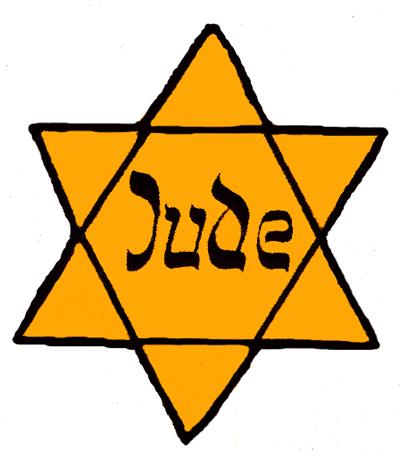
One of the issues that still haunts many 60 years later, is to what extent were all Germans responsible for the Holocaust? Studies by Milgram and Zimbardo have given us some insight into the "Perils of Obedience" and the power of the situation, but how far do we go in absolving the majority of Germans for what went on under their noses, sometimes behind their backs, and mostly in their backyards? How much did they know? How much did they really want to know?And what did they do about it? How responsible are they individually and collectively for what happened?
We heard from a former Hitler Youth and member of the Nazi army that he knew very little about what was going on in the Concentration Camps, although he was very aware of the massacres that were occuring outside of the concentration camps on the battlefields.
This issue still haunts us because we may find ourselves in a similar situation. Of course, I'm not suggesting that the U.S., is engaging in a Holocaust -- don't get me wrong!-- but what do we as citizens of a democratic country do when we are aware of human rights abuses? How do we treat the "other"? How do we justify or excuse our collective actions or inactions? How individually responsible, for example, is Pr. Lynndie England who may face up to 10 years in prison for her involvement in torture in Abu Gharib? Zimbardo suggests that it is very easy to capitulate to the situation as the Stanford University Prison study documented. What will we do when it is all said and done? Reflect on rights and wrongs? Right wrongs? Or just say we really didn't know what was going on....
Thursday, September 15, 2005

Tuesday, August 16, 2005

Subscribe to:
Posts (Atom)
War against Euphoria
Hate Hope and Human Rights At least that's what the addicts describe it as. In 2020 alone, an estimated 9.5 million Americans, just A...

-
The United States has consistently tiptoed around Chinese human rights issues. An American politician may occasional issue a condemnation ...
-
One of the issues that still haunts many 60 years later, is to what extent were all Germans responsible for the Holocaust? Studies by Milgra...

